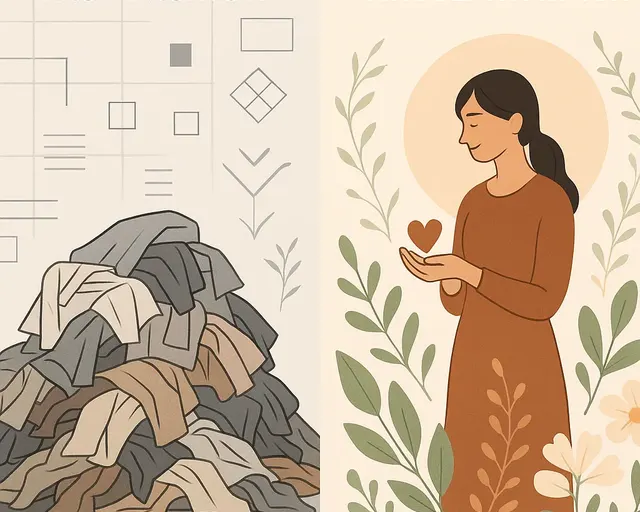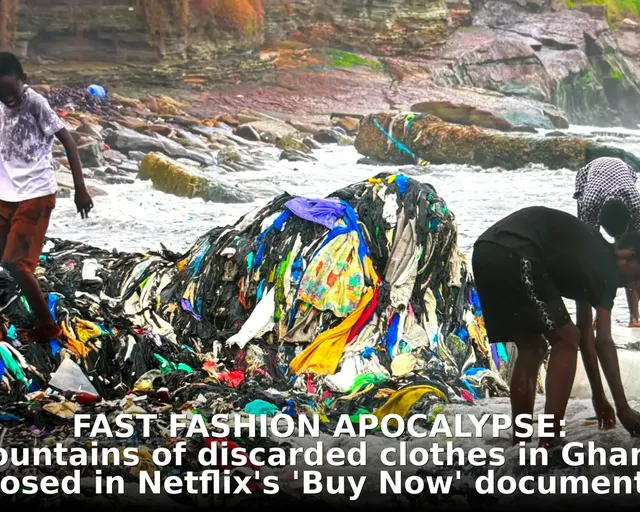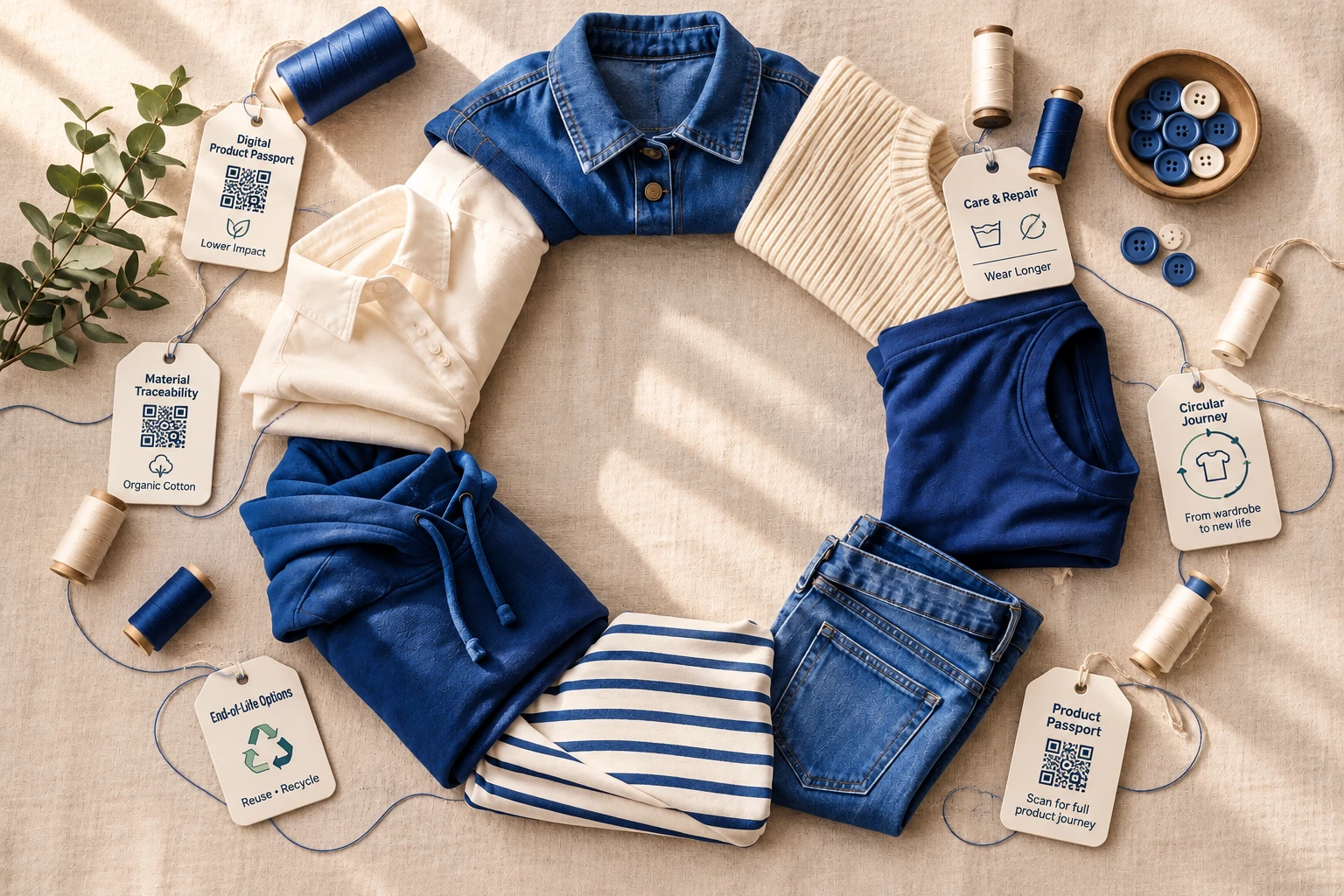
Mending a shirt, buying second-hand and passing clothes on to a friend all help, and I would encourage every one of them. Individual habits matter, but they cannot carry the whole job.
The biggest changes happen upstream, in the rules brands operate under, the infrastructure that handles clothes at the end of their life, and the data that follows a garment from factory to wardrobe. This is the fourth article in my series on circular fashion. Refer to series article links at the end of this blog post. Having looked at what we can do as individuals, I wanted to step back and map the levers that change the system itself, through a product manager’s eyes.
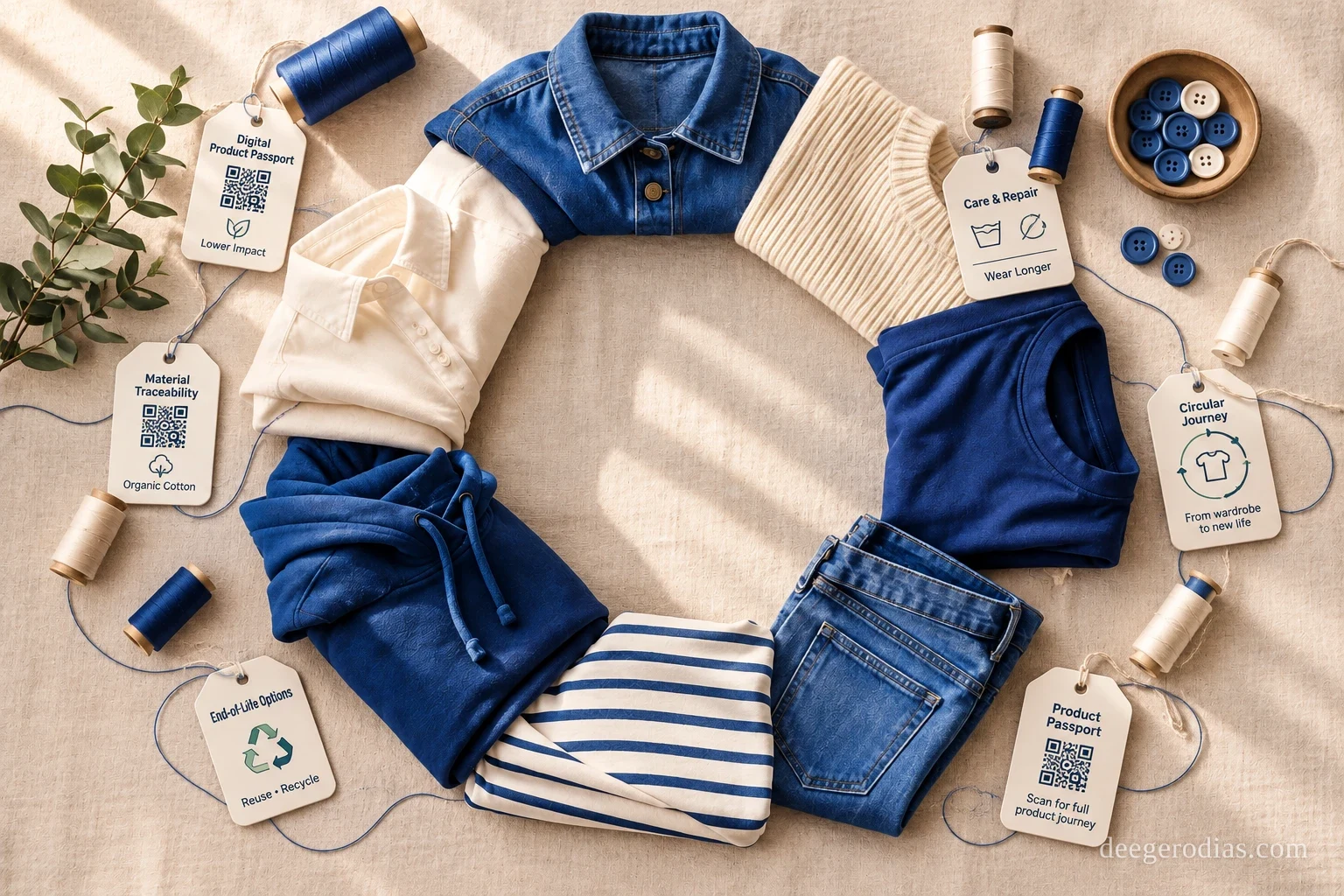
Four levers can help change the system. Jump straight to any of them below.
The system
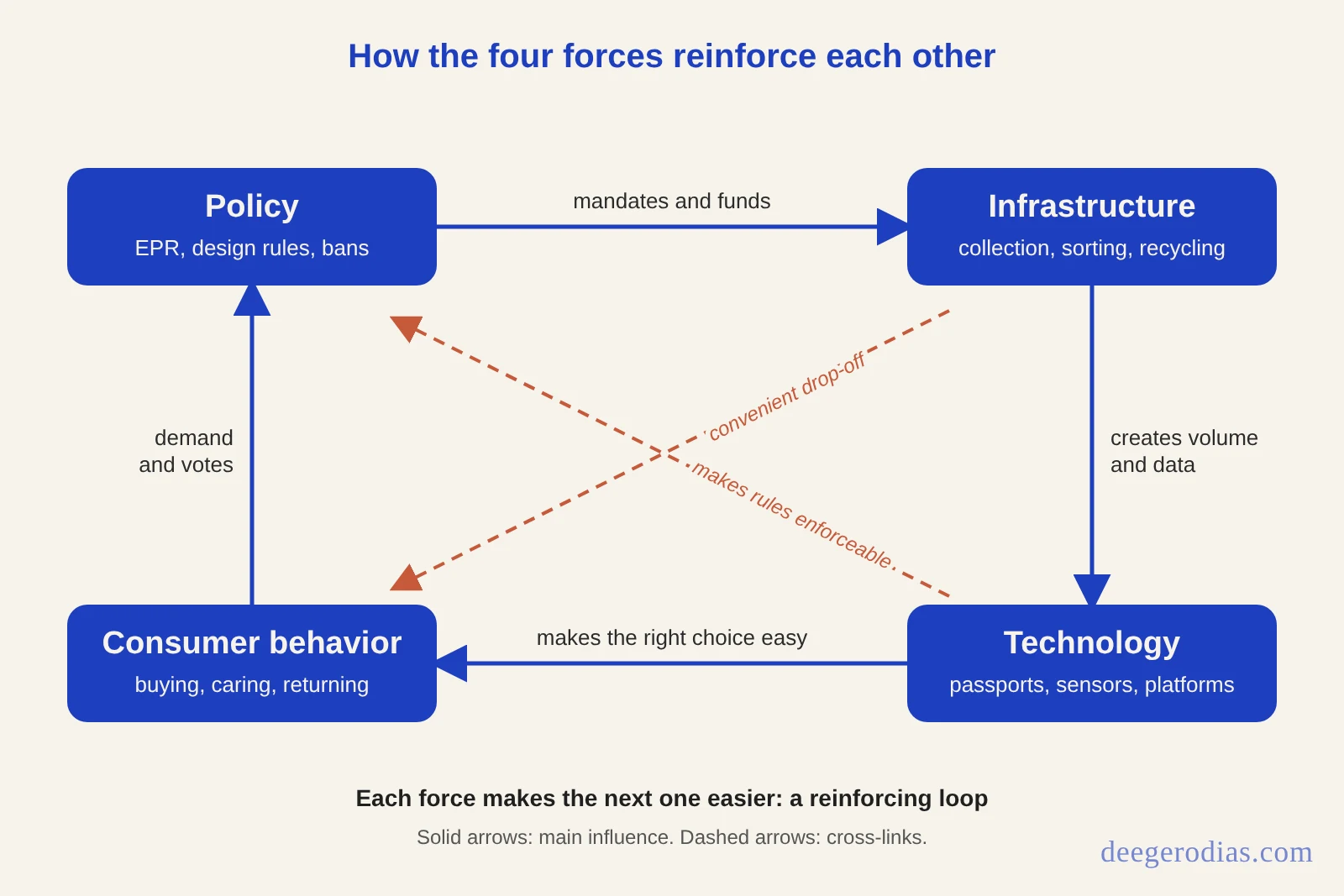
Think of a garment’s life as a loop. Four forces keep it turning: policy sets the rules and the funding, infrastructure provides the collection and sorting capacity, technology makes that capacity smarter, and consumer behavior determines demand.
Each force depends on the others. Good rules need somewhere for clothes to go, and good infrastructure needs reliable data to run well. Too often, though, brands step away once the sale is made, and what happens to a garment afterwards is left to the consumer and the waste system. That accountability gap is where the levers below come in.
Producer responsibility
The idea behind extended producer responsibility (EPR) is simple: the brands that put clothing on the market help pay for what happens to it after it is thrown away. That gives them a real reason to design for durability, repair and recycling.
France has run a textile scheme since 2007, through its eco-organization Refashion. The EU’s revised Waste Framework Directive now requires every member state to set up textile EPR schemes by April 2028, so what France has learned over almost two decades is about to matter far more widely.
Incentives
Rules also change what is cheap and what is costly. Three EU measures stand out, and together they make waste a more expensive business model.
Burberry’s 2017-18 annual report showed it had destroyed £28.6 million of unsold clothes, accessories and beauty products, which the company said helped protect the brand against counterfeits. After the backlash, it said it would stop. Other well-known names have faced similar reports in the press.
A rule that makes that choice unavailable pushes brands to produce more carefully in the first place.
When it costs companies less to destroy unsold garments than to keep them in inventory, the problem isn’t the clothes. It’s a business model that rewards waste over responsibility.
Transparency
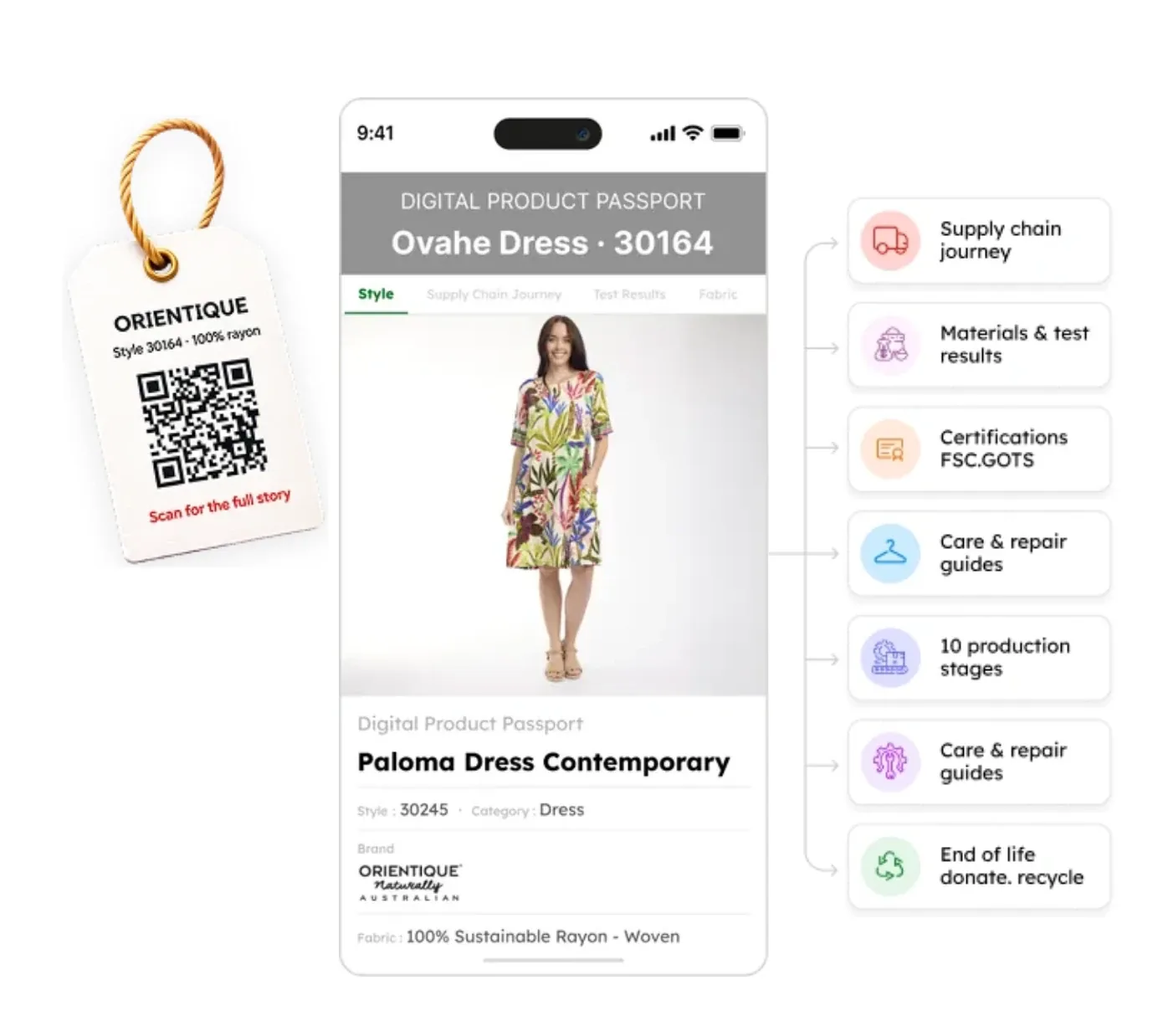
A digital product passport (or DPP) could record a garment’s materials, origin, care instructions and recycling options, and make them available with a scan. This is the lever closest to my own work, so I want to look at it as a product manager would.
The PM view
Before asking what a DPP should contain, I would ask who it is for. A single DPP has to serve sorters, repairers, resale platforms, regulators and consumers, and each of them comes to it with a different need.
Each user has a different Job-To-Be-Done (JTBD), and the DPP should help them decide and act.
- Sorters When I need to route a garment, I need accurate fiber composition, material and color data, so I can identify it and send it to its next destination.
- Repairers When I need to fix a garment, I need construction details, material specifications and care information, so I can find a suitable repair and extend its life.
- Resale platforms When I need to list an item, I need reliable product identity, provenance and condition information, so I can authenticate it and build buyer confidence.
- Regulators When I need to check compliance, I need traceable, verifiable product and supply-chain records, so I can confirm producers meet the requirements.
- Consumers When I need to decide what to do with a garment, I need clear care, repair, resale, donation and recycling guidance, so I can choose well and keep it in use.
We can’t manage what we can’t measure
I like to set objectives and key results for each user, so here is how I would measure a DPP’s success.
These are proposed targets for illustration, not industry benchmarks.
| User | Objective | Sample key results |
|---|---|---|
| Sorters | Improve sorting accuracy and efficiency. | 90% material identification for eligible garments; 30% less manual identification time; 20% more garments correctly routed. |
| Repairers | Make repair easier and extend product life. | Repair information for 90% of eligible garments; 25% faster initial assessment; 20% more successful repairs against baseline. |
| Resale platforms | Improve product trust and enable secondary-market sales. | Verified information for 90% of eligible listings; 30% less verification time; 10% higher conversion rate. |
| Regulators | Improve compliance visibility and reduce verification cost. | 100% of mandatory fields completed for in-scope products; 95% of required records retrievable and auditable; 40% less time to retrieve compliance evidence. |
| Consumers | Help consumers decide well and keep garments in use longer. | 40% scan rate within 12 months of purchase; 90% find care and end-of-life guidance within two interactions; 20% more completed repair, resale or donation actions against baseline. |
What do DPPs look like today?
Early examples already exist. Scanning a QR tag can open a product page covering the supply chain, materials, certifications, care, repair and end-of-life options. At the EU level, the DPP registry went live on July 20, 2026, although the textile-specific requirements are still being developed.
What would I improve?
A DPP is only as good as its verified data, so trust comes first. Beyond that, I would like to see DPPs do more than inform. The most useful version tells a person what they can do next: where to repair this garment, how to resell it, where the nearest collection point is.
That shift, from a record of facts to a prompt for action, is what turns a compliance requirement into something people actually use.
- 100% organic cotton
- Manufacturing origin and supplier records
- Material certifications and care instructions
- Repair history, if recorded
- Repair Find a repair service
- Resell Find resale options
- Donate Find collection partners
- Recycle Find appropriate facilities
Four questions to ask before building
If you are working on a DPP or anything like it, these are the questions I would settle first.
- 01 What data matters? Start with the decisions each user needs to make, then collect only what supports them.
- 02 Who owns the data? Be clear about who maintains it, who can change it and who is accountable when it is wrong.
- 03 Can the data be trusted? Verification is what separates a useful DPP from a marketing page.
- 04 Does it deliver value? If scanning the tag does not help someone do something, they will stop scanning.
Infrastructure
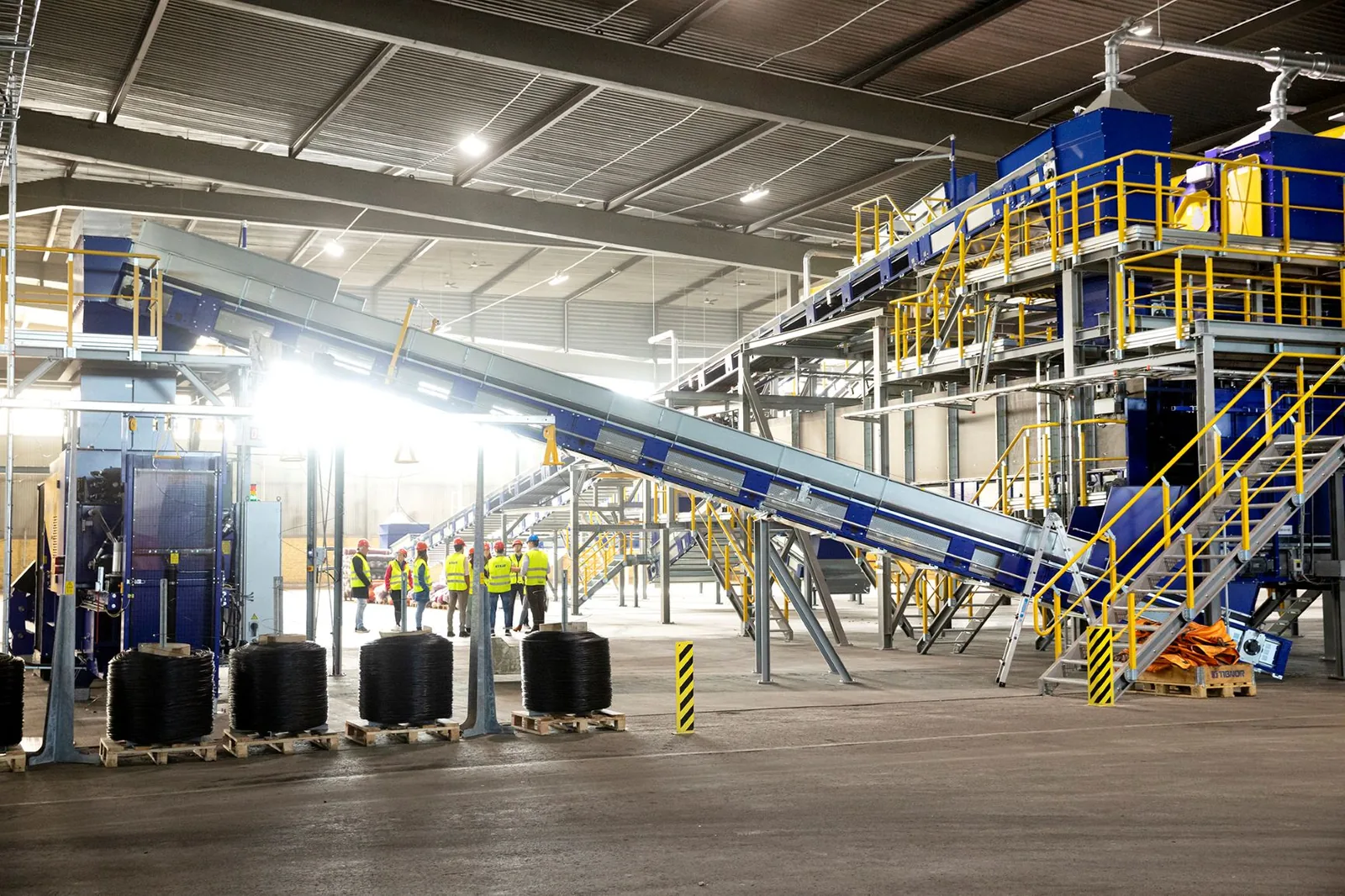
Even the best rules and data need physical capacity behind them. The Siptex plant in Malmö, Sweden, is my favorite example. It uses near-infrared sensors to sort used textiles by fiber and color.
That matters because circular businesses need a predictable supply of well-sorted material. Without it, recycling stays small, expensive and unreliable.
Who is making headway
Two examples give me hope. The EU’s 2022 Strategy for Sustainable and Circular Textiles sets out a direction that the later directives and regulations are now turning into law. And France’s long-running EPR system shows what a scheme looks like after years of real operation.
What both teach is that no single rule works alone. Producer responsibility, incentives, transparency and infrastructure each do a different job, and the system only turns when they move together.
What you can do
Systemic change still needs people pushing in the right direction. Here are five practical places to start.
- 01 Ask brands where their clothes are made and whether they offer repair, take-back or resale.
- 02 Use existing local textile collection points instead of the bin.
- 03 Respond to public consultations on policy such as packaging, waste and product design.
- 04 Support brands that publish their materials and production locations.
- 05 If you work in tech or product, contribute to DPPs, resale platforms and sorting software.
Small steps and big shifts depend on each other. Habits create demand, and rules and infrastructure make that demand easy to meet. In the next installment we will look at how circular fashion plays out at both ends of the market, from luxury to low-cost.
Read Article 5: Circular Fashion for All: Luxury vs. Low-Cost
And if you’re interested to learn more, check out the rest of the articles in this series:
- Read Series Intro: From Fast Fashion’s Graveyard to a Circular Tomorrow: A Fast Fashion PM’s Wake-up Call
- Read Article 1: Where Does Fashion Go to Die?
- Read Article 2: Beyond the Linear: Core Principles of Circular Fashion
- Read Article 3: Quick Wins for a Circular Wardrobe: Easy Steps You Can Take Today
- Read Article 6: Looking into the Future: AI & Transparency
- European Commission: EU Strategy for Sustainable and Circular Textiles
- European Commission: Siptex, a pioneering textile sorting technology for increased circularity
- EUR-Lex: Directive (EU) 2025/1892 amending the Waste Framework Directive (textile EPR schemes due April 2028)
- EUR-Lex: Regulation (EU) 2024/1781, Ecodesign for Sustainable Products Regulation
- European Commission: Digital Product Passport (how product data is stored, accessed and linked to physical products)
- European Commission: Digital Product Passport registry now live (July 20, 2026), confirming the registry is operational and its role in the EU ecosystem
- iSolution: Digital Product Passport (image of a passport example)
- Refashion: France’s textile, household linen and footwear eco-organization (EPR since 2007)
- Sysav: World-unique textile sorting plant put into operation in Malmö
- Image: Sysav, Siptex textile sorting plant, Malmö
- Euronews: Burberry burns almost 32 million of its own gear to protect against fakes (July 2018)
- CMS: New EU rules to prevent the destruction of unsold textiles (applies from July 19, 2026)