Quick Wins for a Circular Wardrobe: Easy Steps You Can Take Today
You do not need to overhaul your whole closet to start. Six small, low-effort steps that keep clothes in use for longer, from resale apps to a needle and thread.
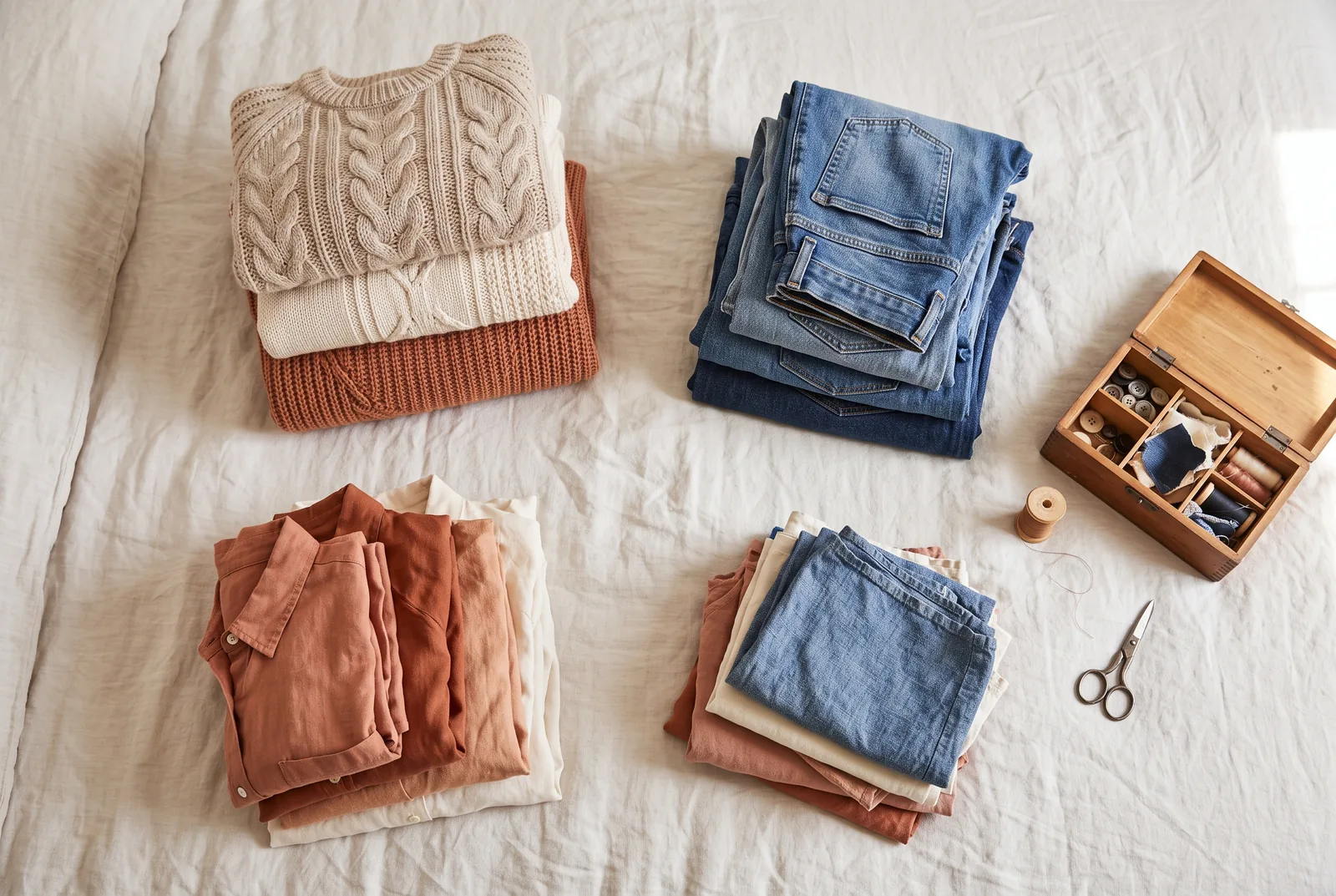
Big ideas about circular fashion can feel far away from your actual wardrobe. The good news is that you can start with small actions that take an evening or a weekend, and that every one of them keeps a garment in use for a little longer. This is part of the series that began with From Fast Fashion's Graveyard to a Circular Tomorrow and continued with Beyond the Linear, and this instalment is the practical one.
Why quick wins matter
Small steps build momentum. When you mend one shirt or sell one jacket, you learn how the system works, and the next step feels easier. They also make you a more credible voice when you talk to friends, brands or colleagues about change, because you have tried it yourself.
Here are six steps, grouped by theme. Pick one and start there.
1. Re-commerce: buy and sell second-hand first
Before buying something new, check whether it already exists second-hand. Vinted describes itself as Europe's leading platform for second-hand fashion, connecting millions of members across 20+ markets. Wallapop calls itself the leading platform for conscious and humane consumption in Spain. It was founded in Barcelona in 2013 and is present in Spain, Italy and Portugal.
I have used Wallapop myself. When we moved to Madrid, our cargo shipment arrived more than a month after we did. Once it did, we found we had a lot of things my son had grown out of, and I was able to sell a couple of them on Wallapop.
The same apps work in reverse. Photograph the pieces you no longer wear in daylight, describe the size and condition honestly, and list them. Clothes you sell are clothes someone else does not have to buy new.
Clothes you sell are clothes someone else does not have to buy new.
2. Care and repair: learn three basic stitches
Most mending guides for beginners start with very little: a needle, thread, scissors and a few pins. They usually cover three core techniques:
- Reinforcing: adding rows of small stitches to fabric that is thinning but not yet torn, to spread the stress.
- Patching: stitching a piece of fabric over or behind a hole, with extra care at the edges.
- Darning: weaving thread across a small hole or a worn area to rebuild the fabric.
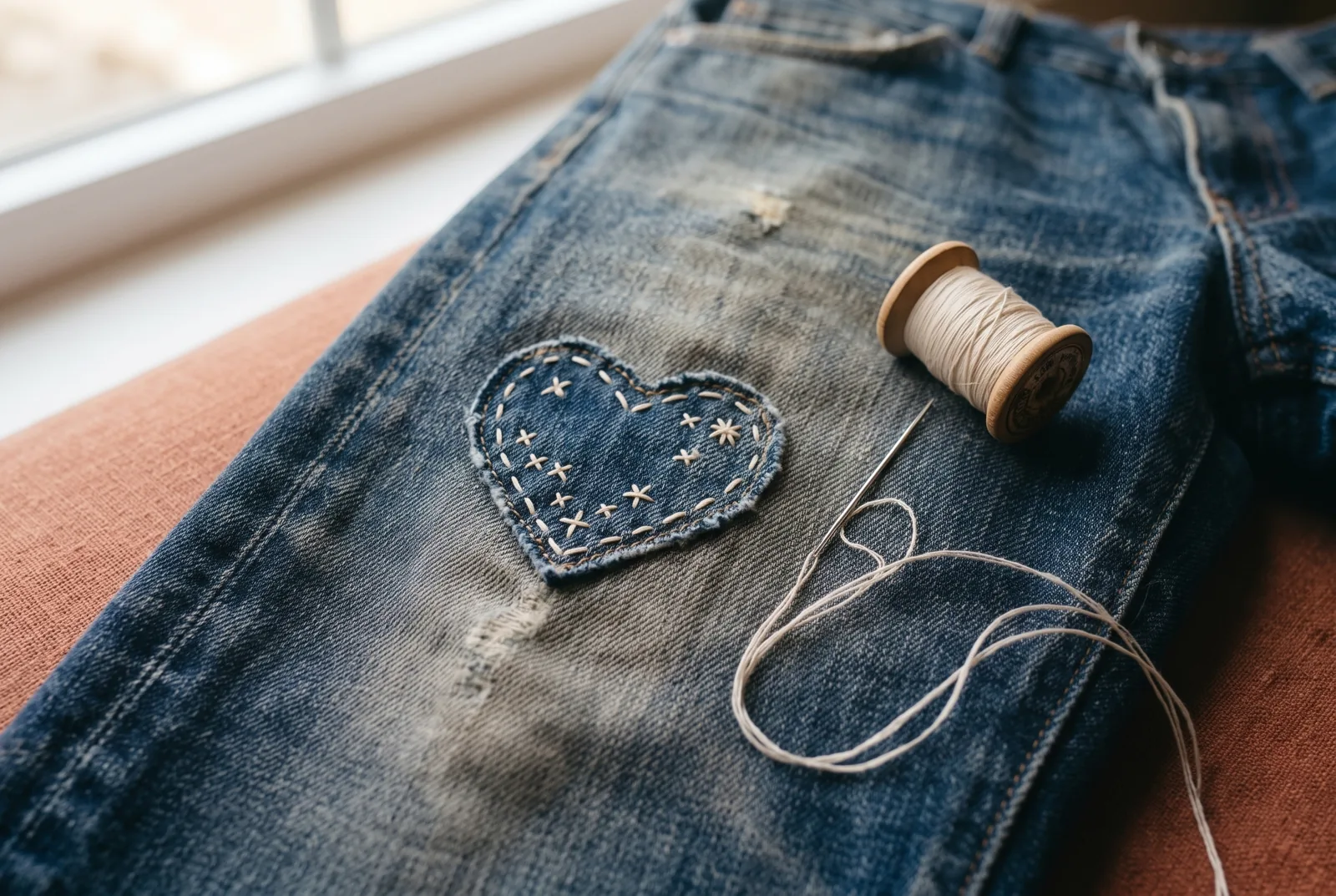
Start with something low-stakes, such as a sock or an old T-shirt. Visible mending, where the repair is a feature rather than a secret, is a popular way to make a favourite piece look even more yours. Also check the care label, wash less often and at lower temperatures, and fix a loose button before it gets lost.
3. Rental and swapping: borrow the one-off outfit
Children are the best argument for swapping. In my son's first three years he grew out of things at astonishing speed, and I did not buy many infant clothes. A colleague had given birth to a boy just before I did, and I mostly received what her son had grown out of. When my son outgrew them in turn, I passed them on to other friends who needed them.
Collection drives helped too. Daycares and kids' schools usually run clothing collections and other charity programmes, and I took part in them back in Bangkok. I also joined Expat Mommies groups on Facebook, where we swap baby clothes all the time. If you are in a similar position, ask around: a group like that, or a friend whose child is a little older than yours, can save you a lot of buying.
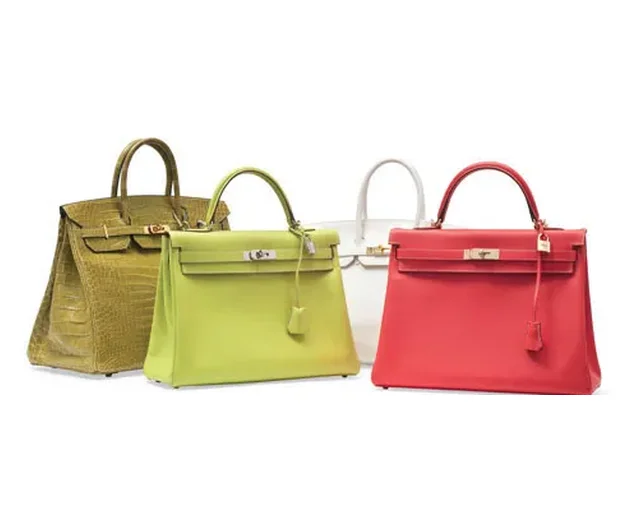
Rental is a different kind of borrowing, and one I know from the other side. In 2016 I started Armadio in Singapore, a fashion rental subscription. It began as a clothing idea and became a handbag subscription, because sizes and fit made clothing inventory so complicated. It did not turn into the business I hoped it would, but I still believe in the idea behind it: access can be better than ownership.
For an occasion you will only dress for once, such as a wedding or a gala, rental platforms and friends' wardrobes are worth a look before you buy. A small caution: rental is not automatically greener, because shipping and cleaning count too. It works best when a garment is rented many times and when you choose local options where you can.
4. DIY upcycling: give an item a second job
Upcycling means turning something you already own into something you will actually use. Some things I have done myself: when I was younger I turned worn-out jeans into shorts, and recently I turned an old bedsheet into rags for our kitchen. Other ideas that need little skill include making worn-out items into a tote bag and using fabric scraps for hair ties or patches. Take a before photo, because the change is half the fun.
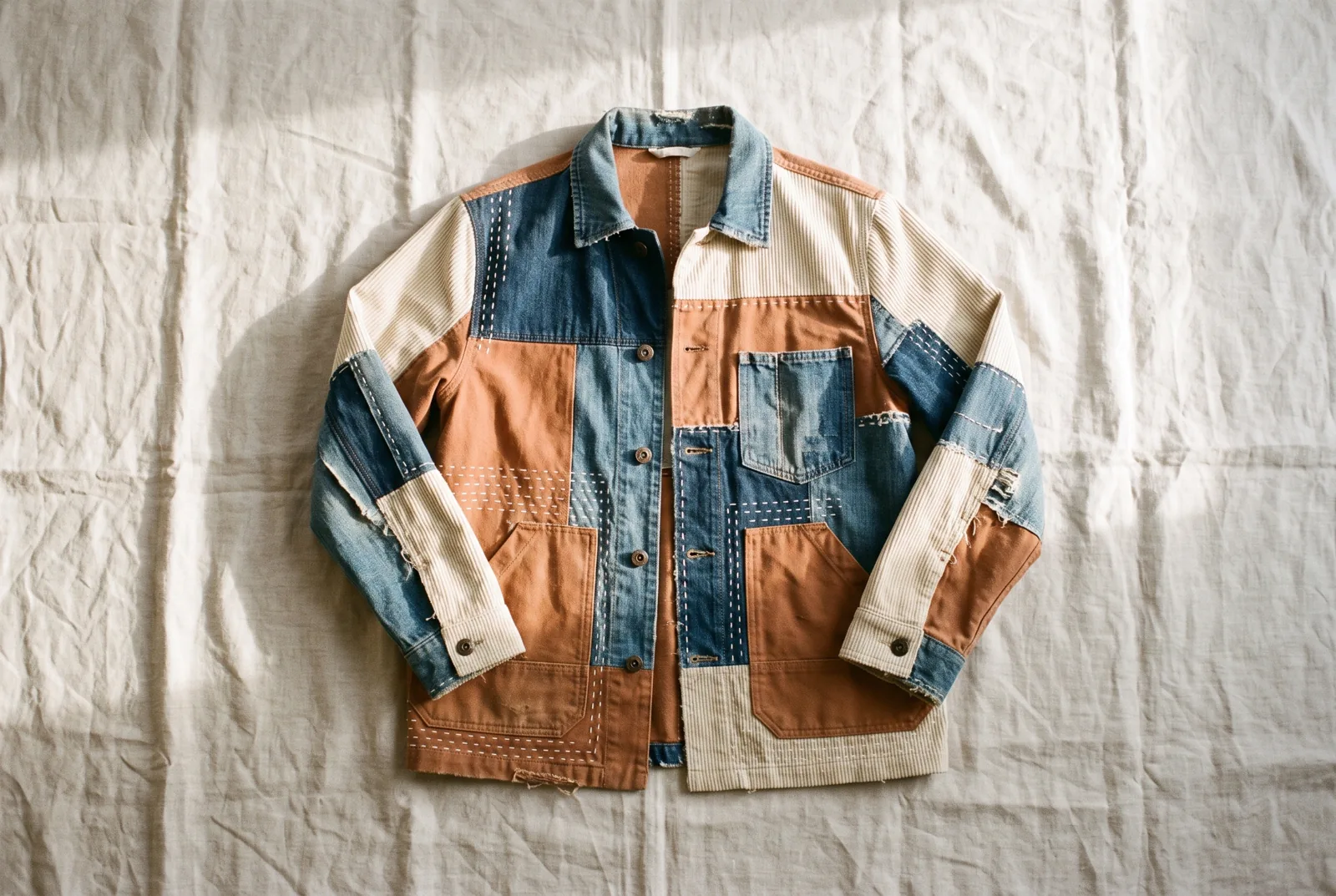
This is one of the projects that has been on my own checklist for a while. My plan is to buy a portable sewing machine, enrol in a basic sewing class, and start repurposing old clothes into new ones. I want to be able to design and make my own clothes one day, trying it out with small things for my son first. If you would like to try the same, a compact machine is easy to find online, and this search on Amazon Spain is a good place to start comparing options.
5. Mindful shopping: choose brands that take clothes back
When you do need to buy something new, look for brands that have a plan for the garment's next life. Levi's SecondHand is an online store for used and vintage Levi's, and it began in October 2020 as a buyback programme in which good pieces are cleaned and resold. Patagonia's Worn Wear offers repairs at its stores across Europe and sells repaired gear second-hand, which at the moment is in its Berlin store. H&M runs a garment collecting and recycling programme in its stores, including in Spain.
Schemes like these change over time, so check each brand's current terms and which stores or countries take part before you plan a trip. It is also worth asking a more basic question before you buy: will I wear this at least thirty times? If the honest answer is no, leave it on the rail.
6. Know where to take what you no longer need
Pieces that are too worn to sell or swap still have somewhere to go. Check what each option accepts before you drop anything off.
One business I find really cool is Trashie and its Take Back Bags, although it is only available in the US for now. The mechanics are simple: you order a bag, fill it with clothing, shoes, accessories or home textiles, scan the QR code and drop it at the mail carrier of your choice. Trashie sorts what arrives so each item goes to its next best use, and you earn rewards credit for the bags you send. A single bag costs $20 at the time of writing, and Trashie says 95% of what it receives is repurposed, reused or recycled.
If you are in Madrid, here are three options:
- Punto limpio, fixed or mobile. Look for your nearest fixed (punto limpio fijo) or mobile recycling station on the City of Madrid website. These city-run clean points have dedicated bins for clothing and textile recovery.
- Authorised street containers. Humana manages thousands of collection containers for second-hand textiles across Spain, and what it collects helps fund its social and environmental programmes.
- Donation boxes and social-enterprise containers. Moda re- is a non-profit social cooperative promoted by Cáritas that collects clothing to clean, redistribute or recycle ethically. Use the map on its website to find the nearest container or shop.
Most importantly, many of these organisations also offer home pick-up, so check each website or call to see what is available where you live.
The toolbox: a one-evening wardrobe reset
Copy this list and tick things off as you go:
- Take everything out of one drawer or one section of your wardrobe.
- Sort into four piles: keep, repair, sell or swap, and pass on.
- Photograph two or three items for resale and list them.
- Mend one thing, even if it is just a button.
- Put the pass-on pile in a bag by the door so it actually leaves the house.
- Write down one rule for your next purchase, such as "check second-hand first".
Where this leads
These habits are worth doing on their own, but individuals can only go so far. To shift the whole industry we also need systemic change: policy, infrastructure and design decisions that make the circular choice the easy one. In the next article, we look at those systemic shifts in more detail.
For now, pick one step from this list and try it this week. A small start is still a start.
Read Article 4: Building a Truly Circular System: Systemic Shifts for Long-Term Impact
And if you’re interested to learn more, check out the rest of the articles in this series:
- Read Article 1: Where Does Fashion Go to Die?
- Read Article 2: Beyond the Linear: Core Principles of Circular Fashion
- Read Article 5: Circular Fashion for All: Luxury vs. Low-Cost
- Read Article 6: Looking into the Future: AI & Transparency
- Read Series Intro: From Fast Fashion’s Graveyard to a Circular Tomorrow: A Fast Fashion PM’s Wake-up Call
- Vinted
- Wallapop
- Vinted and Wallapop company descriptions, as published on their LinkedIn pages
- Wikipedia: Vinted
- Wikipedia: Wallapop
- FashionNetwork: Levi's launches secondhand denim buyback program
- Levi's SecondHand
- Patagonia: Worn Wear (Europe)
- H&M Spain: Garment collecting and recycling
- Trashie: Take Back Bags
- City of Madrid: Waste collection and Puntos Limpios
- Humana Spain
- Moda re-
- Core Fabric Store: Visible mending for beginners