The Science Gap: Who Was Medicine Built Around?
Before we ask how well healthcare treats women, it is worth asking a simpler question: who was medicine built around in the first place?

When I lost my twins, test after test could not give me an answer, and I came away with a question that has stayed with me ever since: how can something so important still be so poorly understood? A few years later, when I went looking for answers about my own body again, I found a version of the same problem.
In this second article of Seen in Slices, I would like to start with the science itself. Before we ask how well healthcare treats women, it is worth asking a simpler question: who was medicine built around in the first place?
A short history
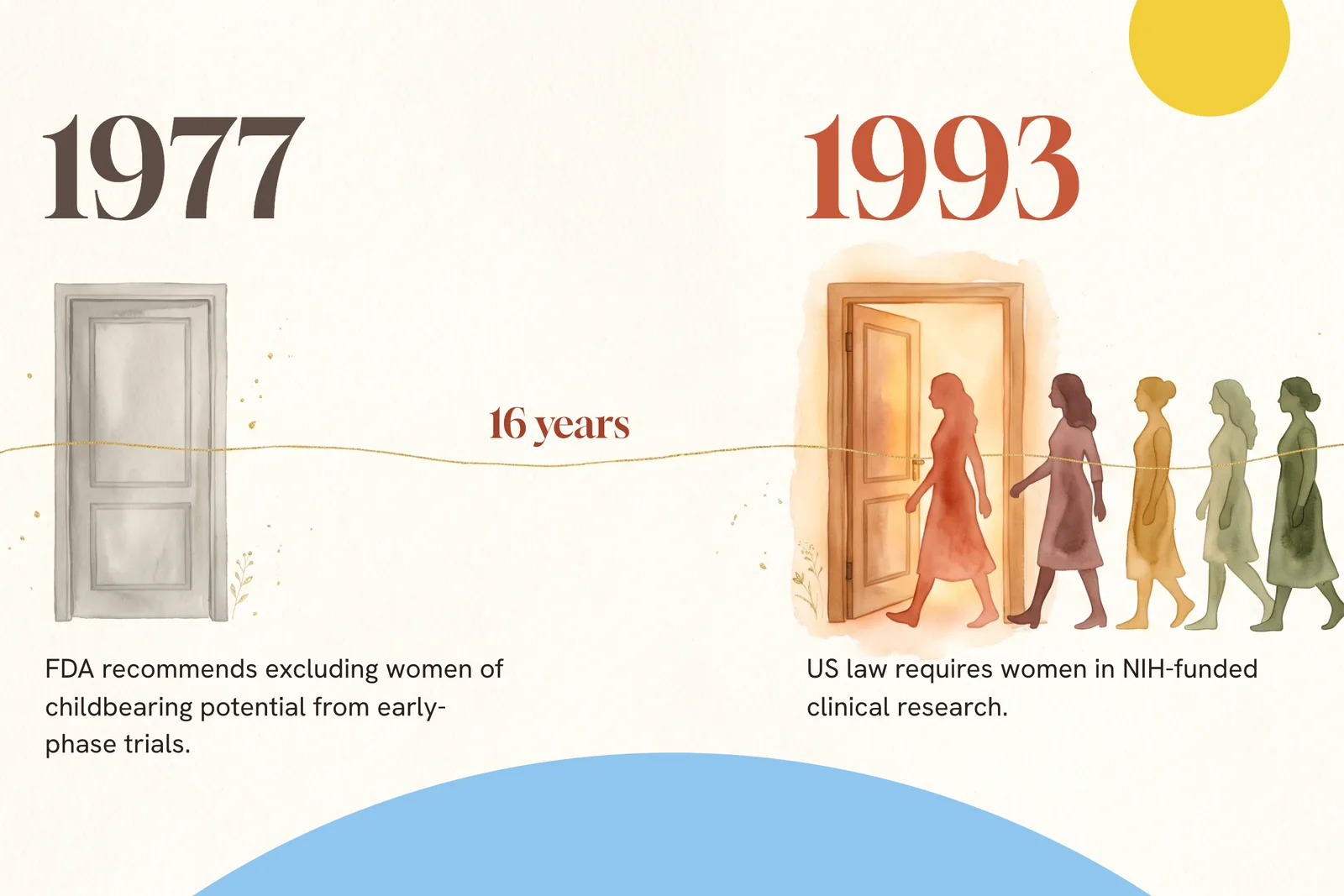
The reasons were not careless. In 1977, after the thalidomide tragedy, the US Food and Drug Administration recommended excluding women of childbearing potential from early-phase drug trials. The intention was protection, but the result was that the male body became the default model for medicine.
It took until 1993 for US federal law to require that women be included in clinical research funded by the National Institutes of Health, and for studies to be designed so that differences between women and men could be analyzed. The revised guidelines took effect in 1994.
On The Diary of a CEO, orthopedic surgeon Dr. Vonda Wright described the consequence: foundational drugs, such as aspirin and blood thinners, were studied mostly in men and then generalized to women. Her own lab research has also found that XX and XY stem cells behave differently, yet this is not yet part of general medical understanding.
What it looks like in practice
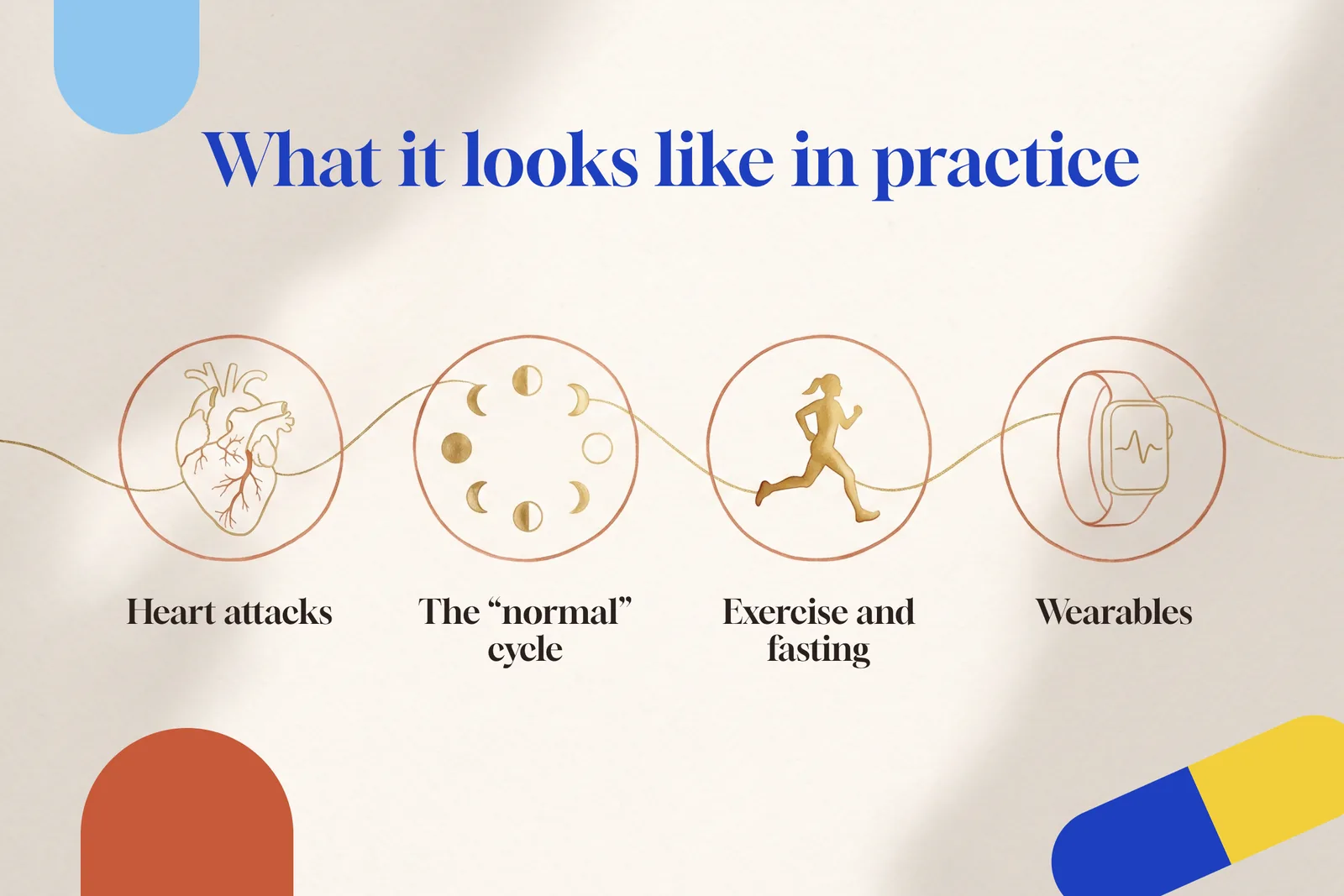
The same panel of specialists on that episode named gaps that most of us never hear about:
- Heart attacks: Dr. Wright explained that women often present differently, with diffuse microvascular blockages rather than a single blocked artery, yet this is still labeled "atypical" rather than typical for women.
- The "normal" cycle: fertility specialist Dr. Natalie Crawford noted that there is no agreed research definition of a normal menstrual cycle, which makes it hard for any woman to know when something is genuinely wrong.
- Exercise and fasting: exercise physiologist Dr. Stacy Sims described sports science built almost entirely on male physiology, and fasting protocols developed on men that can backfire for women.
- Wearables: Dr. Sims also pointed out that many devices do not account for changes across the cycle, so women can end up distrusting their own bodies because of inaccurate data.
- Hormone therapy: beyond that episode, the 2002 Women's Health Initiative study led to a sharp fall in hormone therapy use. Its participants averaged 63 and were mostly more than 10 years past menopause, yet the headlines were applied to women of all ages, and later analyses found the picture more nuanced. This is a decision to make with a clinician, and I will return to it in article 4.
These are the views of individual experts, and I will continue to read the primary research behind each one. But the pattern is consistent: when the default is a male body, everything built on top of it quietly inherits that assumption.
When the default is a male body, everything built on top of it quietly inherits that assumption.
A product manager's view
In product work, this is a classic case of sampling bias. If the people in your research sessions are all one type of person, your product is built for that person, and everyone else becomes an "edge case". This rarely happens on purpose. It happens when no one stops to ask whose body, whose cycle and whose symptoms the evidence is based on.

What strikes me most is how ordinary the fix sounds: include the user, record the differences, and analyze them. The gap is less about a lack of intelligence than about a lack of attention, and attention can be redirected.
What's next
The science gap explains why so much of what we know was learned from one kind of body. In the next article, I will look at the data gap: even when research exists, hardly anyone is counting women across a lifetime, so every woman ends up as her own record keeper.
Thank you for reading. If you have noticed this default in your own care, I would really value hearing about it, and please subscribe to Letters from Madrid to follow the series.
This series is personal reflection and research, not medical advice.
- Why a product manager is writing about women’s health.
- 02Medicine was built largely on male bodies, and what that means for the rest of us.
The science gap
You are here - 03Nobody counts women across a lifetime, so every woman becomes her own record keeper.
The data gap
Coming soon - 04Years to diagnose, specialists in separate rooms, and why better implementation matters as much as new science.
The care delivery gap
Coming soon - 05Where the money goes, where it does not, and the product thinking that follows.
The investment gap, and what I would build
Coming soon